Which should I do... rent, lease, or buy new skis?
Otherwise known as the shady demo skier dilemma (you know who you are).
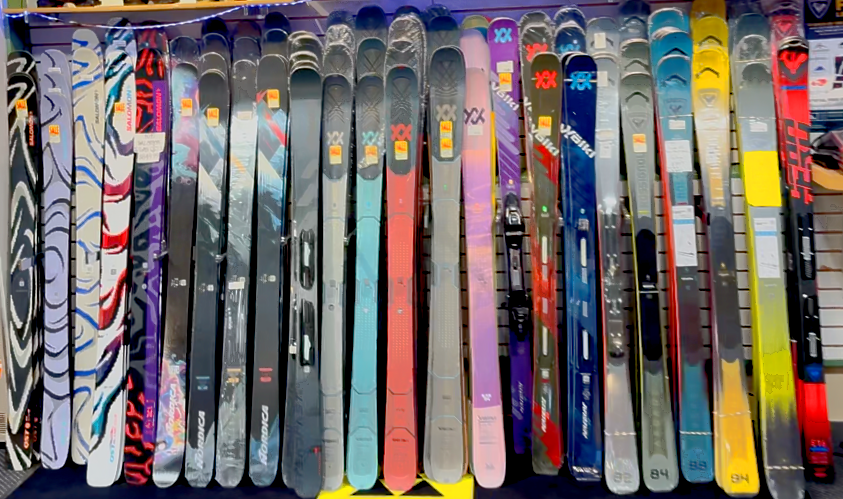
Firstly, I'd like to qualify this "discussion" by putting one condition on it-
We're talking about buying new gear.
We will talk about boots too, inasmuch as it applies to this discussion- however, in the interest of said relevance, the focus will be on skis.
Generally, I don't promote buying used gear. There are too many potential problems with used gear.
For example;
Bindings- I cannot count the number of times people have come into a shop I was working in and the gear was gorgeous... It looked brand new, was barely used, or not used at all, and looked really cool.
However, the skis were old... I've seen 30 year old skis come into the shop looking like they just came off the sales floor. The problem here is that 30 year old bindings are, most certainly, out of date. Binding manufacturers maintain a list of bindings they indemnify, and bindings can fall off that as young as five years old.
On top of that, no matter how good the skis look, there are many factors to viability-
Case in point- Storing skis in a hot attic is bad- heat can cause delamination, some of which can be invisible to inspection. Heat causes other problems too- "shrunken" bases and warping are some of the more common ones.
What about usage? Were they dropped on the bindings? were they skied and hyper-flexed over a mogul, or in a crash that caused some kind of internal damage?
Anyway, the laundry list is long. Because of that laundry list of potential issues, I'll never buy used skis. While you can get them on the cheap, you might as well throw that money in a fireplace.
This goes for demos too. Demos, in particular, can be abused. Hence my point "the shady demo skier dilemma". Many (self-proclaimed) higher end skiers will use demos instead of buying their own skis. So, they take out demos ounder the pretense that they're testing skis to buy, but they're actually taking out good skis they don't care about, and end up abusing them.
Now that we're clear on my position related to buying gear, let's dive in.
Let's look at factors involved in most people's decision processes.
You're a skier and one (or all) of these factors apply;
You could be someone who's new to the sport, or someone who's been skiing a while but never owned their own skis.
At what point does the investment in new skis provide enough return that I would want to own my own skis?
With that in mind, lets consider:
- Cost
- The number of times I ski, per year
- Who I ski with (family, friends, alone, etc)
- When I ski
- My age
- Physical factors (my health, etc.)
- Job or other life style factors
- The economy
- New versus (last season new) product
The list is long.
Next, let's consider skier ability.
To give people a scale that's familiar, from an American PSIA (ski instructors) viewpoint, let me explain what that means.
Instructors use a 1-10 scale-
Using Google AI, skier level is defined as such:
Skier ability levels are generally broken down into a 1 to 10 scale (or 1 to 9, depending on the ski school) to help standardize lessons, rent equipment, and group skiers. These levels measure your ability to control speed, link turns, utilize ski poles, and conquer varying terrain.
Levels 1–3: The Beginner (Green Terrain)
- Level 1 (First-Timer): You have never skied before. You are learning how to put on your boots and skis, and you are entirely new to the mechanics of sliding on snow.
- Level 2 (The Slider): You can perform a straight glide and come to a stop, but you are not yet consistently turning. You are usually confined to beginner "magic carpets" or very easy green runs.
- Level 3 (The Turner): You can comfortably stop and link turns together. All your turns are the same size and shape, and you are gaining confidence on green terrain.
Levels 4–6: The Intermediate (Blue Terrain)
- Level 4 (Advanced Beginner): You are linking turns together smoothly on all green runs. You can control your speed by changing the shape of your turns and are comfortable riding the chairlift.
- Level 5 (The Intermediate): You can ski parallel (or mostly parallel) through the middle of your turns. You are confident on all groomed blue runs, beginning to use ski poles, and can hockey stop in both directions.
- Level 6 (Strong Intermediate): You initiate turns with parallel skis and use a rhythmic pole plant. You ski confidently on all blue groomed trails and are starting to explore the edges of un-groomed trails or easy bumps.
Levels 7–8: The Advanced (Black Terrain)
- Level 7 (The Advanced Skier): You smoothly link parallel turns with a pole plant on all blue and black runs. You can seamlessly vary your turn size (short, medium, long) to adapt to steeper terrain or variable snow conditions.
- Level 8 (All-Mountain Skier): You can carve perfectly and ski gracefully across all available terrain at the mountain, including ungroomed black trails, moguls, and basic tree runs. You adapt instantly to ice, crud, or fresh powder.
Levels 9–10: The Expert
- Level 9 (The Expert): You are a highly skilled, all-mountain expert capable of skiing extremely steep lines, double-black diamonds, and challenging backcountry terrain with precision and style.
- Level 10 (The Pro / Elite): Reserved for elite skiers, top-tier instructors, and professional athletes. You can aggressively navigate extreme un-mapped terrain, deep powder, couloirs, and high-consequence lines under almost any weather conditions.
...in a nutshell, evaluating the commitment to making the investment in skis can be daunting.
Let's break it down.
BEGINNERS
Let's define "beginner".
You're a beginner (level 1-3).
You've skied a few times and love it, so you want to buy gear.
There are advantages to owning gear-
Dealing with rentals is time consuming, sometimes expensive, and often daunting.
Rental gear is only as good as how well it's maintained, so you know the condition of your skis at all times when you own it.
Also, rentals tend to get a lot of use, and can be pretty worn out.
Let's not forget that rental lines suck, and can be time consuming. There;s no arguing about the fact that getting the rentals, then returning them, is a nuisance, at best, and can take a significant chunk of time out of your day.
In terms of finances, renting is a sunk cost, the moment you walk out the door with them. Once that money is spent, the actual cost of your day increases.
WARNING- TANGENTIAL MATH DIVERSION INCOMING...
NOTE:
If you're interested in breaking down the numbers, consider these factors- if not, skip this italicized section-
*The overall cost of your day =
Take the travel expenses: (gas, lodging, food, liquor, gratuities, etc.) then divide that by the number of days this trip. That gives you cost per day of travel expenses.
Factor in medical bills if someone gets hurt.
Factor in cost of gear- be it rentals or the total cost of skis-boots-poles purchses divided by the total number of days skied (this is important because the daily cost of your gear goes down the more you use that gear). So, the total number of days you ski that gear, divided into the total purchase price, plus maintenance and storage, becomes the cost per day of your gear.
Make the same computations for your clothing, accessories, and their maintenance and storage costs.
-If you rent stuff those computations become a lot easier-
Don't forget it costs money ot go shopping for gear (gas, etc).
Figure the cost of your lift pass per day(or for this particular trip)
FIgure the cost of lessons, day care, and other other similar service.
Think about the stress of travel; including packing, planning et al.
That all sounds complicated, but my fellow accountants understand that the overall investment is a function of total money and time spent over the life of the products, broken down over some relevant time period (annually, monthly, daily, etc).
If you want to look at it in the simplest terms, many of us look at the cost of our day as the price of a lift pass/number of days skied to get a cost of lift pass per day (it makes sense to ski enough days to make the daily cost of a season pass less than the cost of a per diem ticket).
Then, take the daily cost of your ticket/pass and divide it by the number of runs you ski that day. Add in rental costs if you had to rent skis.
Most of us do this calculation in our heads, at some point, to justify (rationalize) the value of a lift ticket/pass over a day of skiing.
-BACK TO OUR REGULARLY SCHEDULED POST-
One thing that adds value to owning your skis is that the learning curve becomes shorter. Using the same skis means you use skis with the same balance point, the same running length and turn radius, they have a tune up you grow accustomed to, all of which brings consistency into the mix. That means you don't have to make new learning adjustments every time you get on a different set of rental skis. Therefore, you get better, and more confident, over a shorter period of time. Consider what that means to you. If that's a priority for you, owning your gear makes more sense.
CONS:
There are disadvantages as well, which are significant-
People tend to grow out of beginner skis fairly quickly. Don't expect to get more than 10 days out of a beginner set before you outgrow them. You can probably get by with beginner skis for a season, but they will, definitely, hold you back in more ways than one.
New skis are expensive- it doesn't matter what level skis they are, skis aren't cheap. Understanding your priorities related to skiing helps make the costs more palatable.
Some vendors don't offer beginner level skis. Most have something that fits the bill, but they aren't in demand. Manufacturers are better served to offer different models of rental skis, then put a different paint job on them (sometimes they don't even do that) on them and make and just throw a price tag on them.
In general, you won't find a variety of models. Beginner skis aren't very expensive to make, but, as a retailer, does it really make a lot of sense to have multiple models of skis, from each manufacturer, that do the same thing?
Hard no.
You'll find one model of skis with a graphics design for males, and another for females. Ususally, it;s the same ski.
Let's dig deeper into the practicality of buying beginner skis-
As a true beginner, the initial learning curve is short. Beginners prefer very short skis, which are easier in the beginning, but one of the first goals of the beginner skier should be to start skiing longer skis, as soon as it's practicable.
So, if you buy skis which are too short, you're dooming yourself to "beginnerdom", for a period which will likely "stunt your growth", so to speak.
Long story short, for the first year or two, depending upon how often you ski, you should continue to rent. In fact, many ski areas offer a "learn to ski" program which includes rentals, lessons, and lift tickets in a combined, and discounted price.
Lets look at the factor of having to re-adjust to different skis- its a little less relevant for brand new skiers. While it remains a factor, and its importance should not be undervalued, it's less important for beginners, while people are still getting used to the concept of having long sticks on their feet for sliding on some type of frozen water.
At this stage of the game, the more important factor is boots. Considering that everyone works on a budget, it's far more important to skew that budget towards comfortable, approporate boots. Boots are the single most important item for skiers, for many reasons, not the least of which being the fact that if your feet are uncomfortable, especially in a cold environment, you're considerably less likely to attach long sticks to your feet and spend money to slide down an icy hill.
Other Considerations:
Are there reasons which make it mpore practical to buy new, beginner skis?
Sure... If you have disposable funds, and buying new skis often, isn't a factor, then have at it. By all means, support your local ski shop.
Also, if you have friends or family who could benefit from those skis, and you can pass them on in such a way that you recover some of the costs, or consider the costs spread among several users, it might make economic, and practical, sense.
CONCLUSION FOR BEGINNERS:
Given the overall sense of "smart" expense allocation, wait to purchase until you've, at least, reached a point where the skis you are using is somewhere between mouth and nose height, when the skis are stood up next to you (race skis excluded for people learning to race).
You're much better off getting yourself a pair of comfortable, good fitting boots that you can flex comfortably in the shop. Having boots that you will use, in good conscience, will do more for your skills growth than new skis, and overall fun factor, exponentially.
What about leasing?
If your heart is set on consistency, and having something akin to your own skis, here's where a season lease is in order. Season leases can range from $150 to $350 per year, and usually includes boots.
You may also be able to lease new and unused products.
In the case where you have purchased boots (which, you ,may certainly choose to do through beginner and intermediate stages) lease fees for skis and poles alone are commonly reduced.
Some dealers offer to maintain their lease skis without a fee (however, this isn't very common, and is becoming less common as the years pass).
in these cases, leasing is, defintiely, a good idea.
So, long story short, leasing beginner skis is a good option. Just remember, some beginner rentals, at some ski areas may include lift ticket packages, in the case where you have not purchased some level of ski pass.* So, if you're brand new and aren't sure you're going to take up the sport as a genuine hobby, stick with daily rentals for the first year or two.
Next-
INTERMEDIATE SKIERS:
Does buying new skis as an intermediate become more practical, thus more economically feasible? Yes- mostly because it takes significantly longer to go through the intermediate phase of skiing than it does the beginner phase. You can exptect to be an intermediate skier for several years.
More below-
Let's review:
Google AI defines intermediate as:
An intermediate skier can confidently link parallel turns, control their speed, and navigate blue runs. They have moved past the beginner "wedge" or snowplow phase, can adapt to varied snow conditions, and are actively focusing on refining their technique and exploring steeper terrain.
Taking this a bit further, we can explore sub levels therein:
Emerging Intermediate (Levels 4-5)
- Terrain: Comfortable on green circles and easier blue squares.
- Technique: You primarily use parallel turns, but you may still revert to a wedge (pizza) occasionally to initiate a turn or manage sudden speed.
- Speed: Controlled, but you tend to be cautious on steeper or icier pitches.
2. Confident Intermediate (Level 6)
- Terrain: Confident on most blue squares and can comfortably manage easy, groomed black diamonds.
- Technique: Solid parallel turns are the norm. You are practicing using poles for timing and can adjust the size of your turns.
- Experience: You can handle groomed trails, softer snow, and basic crud. Your biggest challenges at this stage are maintaining balance on uneven terrain and managing fatigue.
Common Traits
- Gear: Generally use slightly stiffer and wider skis than beginners for better stability at higher speeds.
- Progression Goals: Transitioning from skidded turns to carving (holding a clean edge throughout the turn with consistent transitions), navigating easier moguls, and handling shallow powder.
Pros and Cons are less of a factor here. It should be considered that acquiring one's own skis, as an intermediate, is a good idea, overall.
As a general rule. moving through the "ranks" of intermediacy, takes significantly more time than it does to move through the beginner skill set. Building strength and "muscle memory" at this level takes time. That means you'll have a set of intermediate skis significantly longer than beginner skis.
That, in and of itself, makes it a bit more practical.
If you decide to purchase, it makes the most sense to buy a set of skis you will grow into. With that in mind, you should think about your level of commitment, and think about how much skiing you'll be able to do- not, how much you'd like to do, per se- think more about what time you can practically commit to skiing.
With that in mind, buying skis more than 2, 3 at the most, sub-levels above your ability, doesn't make sense. In other words, if you have to struggle so much that it deters you from skiing, or deters you from growing skills at a rate that keeps you engaged, then having skis which are too difficult to ski on doesn't make sense. Especially considering the fact that skis have become much more versatile (advanced skiers can ski on lower level skis and still have fun).
In other words, intermediate skis are no longer the weak and unexciting devices they once were. Modern intermediate skis are the real deal, and can be a lot of fun.
In the end, buy skis that will be fun, not overly challenging. Skiers at this level really need to learn how to flex skis into a turn (commensurate with the boots), transition consistently from left turn to right turn (and vice-versa) while keeping both skis on the ground, and manage increasing speeds safely.
Having a higher level ski, which it too stiff, makes little sense. If you're working too hard to turn skis, you're less likely to spend the time needed to learn efficient and effective turning. Therefore, you might skip this step entirely. Especially since the thrill of speed (think younger skiers) is quite tempting. Most newer generation skiers don't learn to turn because the skis allow them to skip that step entirely.
Bear in mind, heavier, stronger people may require a set of skis which are higher end, just to handle the associated forces. In that case it's important to know that the sweet spot (balance point) for higher level skis is more demanding, which can slow a skier's rate of growth/improvement.
Keep in mind that the best expected life of a set of skis for newer intermediates is three seasons. Those skis might have a usable life of 90-120 days, but you should consider that you could outgrow them in 50-65 days.
Adding to that, after three seasons you may still be an intermediate (having gone from a level 4 to a 6), but you have likely grown out of those first generation intermediate skis, therefore need a higher-level intermediate skis.
NOTE: there are many experienced skiers who stay on intermediate terrain and consider themselves to be intermediate because they're not aggressive and have no desire to get better as they're enjoying sking at their current level.
When purchasing skis at this level, be sure to talk about your level of experience to the sales person. You're going to need a higher level intermediate ski, which is easy enough to ski on, but can hold an edge on the terrain and in the conditions you will encounter as an experieinced skier- especially if you ski some :easy" black diamond trails from time to time.
Is season lease a valid option for intermediate skiers?
YES!
-Especially if you have a ski pass AND your local lease shop offers intermediate (higher end) leases.
The only limitation upon leases is time frame. You may be required to return your lease prior to season end. That said, if your ski season falls within that window, it's a solid choice.
Remeber that it's important to keep them well tuned and to not mess with the binding setings.
BEYOND INTERMEDIATE:
Beyond intermediate is when things get more vague (this is also where "the shady demo skier" comes into play).
Firstly, lets talk about some of the options-
You can buy, own, and maintain your own skis.
You can lease (or rent) on a season to season basis, often with the option to buy.
You can do daily rentals.
You can do demos.
You can do test skis (think ski essentials).
Let's take the last one first.
What are test skis? Test skis are skis that you can try out at a vendor sponsored demo event, or from a rental/demo shop that doesn't sell skis at retail. The difference is that you won't get your demo fee creditied back towards your ski purchase (which is common at retail shops which demo skis).
What are demos?
Technically, demo skis are skis that a retailer uses to allow customers to rent under the auspices of testing them to make a final purchase decision.
That sounds straightforward. The problem is when customers claim they're in the market for skis but really intend to use them as rentals.
Why is that a problem?
- Demos are meant to represent a ski vendor's best, and renters are hard on skis, form various reasons.
- Demo skis are an expensive proposition for retailers- They cost way more than rentals. They can be purchased directly from the vendor as a package, or they can use skis already in their inventory and put demo bindings on them.
- Demo bindings are expensive, and more difficult to come by.
- Many (most) vendors sell off their demos at the end of the season. If they're lucky, they can recover their costs. What usually happens is that the retailers lose money on the sale.
Why do you care?
Most people don't because they get a higher end ski at a favorable price, with bindings they can (try to) adjust on their own. Remember what I wrote above about buying used skis? Anyway, that applies.
Demo skis are essential to retailers for selling skis. Customers who are regular, experienced skiers, are far less likely to buy skis without having tested them.
It makes snese- Skis are expensive; they're a long-term investment and go to the immediate satisfaction of the purchaser. Upper level skis are much more expensive than intermediate skis, and skiers have developed style and preference that speaks to specific factors in a ski's performance and skiability.
Daily Rentals.
This is where programs like MY EPIC GEAR are coming into vogue. For people who don't ski a lot (a weekend here and there, maybe a single vacation in a season) then, from a cost perspective, it makes sense. The problem becomes getting stuck with a ski you don't particularly like, availability, maintenance, and being stuck to a single resort. You would need to make sure your program allows rental in one location and return in another. SKis arent cars so that's not common.
Lease-
There aren't a lot of shops who do a high end lease. These skis tend to get trashed so it's not cost effective for the leasing service. If you can find a shop doing a season lease on a high-end product, go for it. The problem being that you take what they offer in the lease program. If you don't like the skis/boots, you're stuck.
Buy-
For the most part, buying high end gear is the best option. If you ski often and ski multiple locations, it behooves you to have your own skis, based upon convenience alone. With the advent of mega-passes, people often ski multiple areas the same weekend, or during the same vacation.
You can, of course, wait for end of season sales, or buy last year's products, but there can be issues there too-
For example, you (usually) can't test last year's skis. Retailers sell them off. Waiting for sales sets you up for availability issues. Sizes and/or entire model lines, leaving you hanging.
You could get lucky by testing a pair of skis and then waiting for it to go on sale, or you could just buy skis without testing them. You have to evaluate those risks for yourself.
SPECIALTY SKIS:
Odds are you will definitely have to buy yuour own specialty skis. Specialty skis include park skis, race skis, touring skis, and the like.
You can often find used race skis, but you know my feeling on used skis.
One of the most common issues with buying used race skis s that they are "tuned out"; which means the skis (which are commonly tuned after every day of skiing) have a minute amount of edge left to sharpen, or the base has been ground away such that it's less than a mm thick. Race skis are very specicic. Unless you really know what you're looking for and how to look for it, buying used race skis is an enormous risk.
Park skis- these rarely last an entire season for competition park skiers. For less competitive park skiers, they still take a serious beating and buying them used is downright stupid. You might as well just pour gasoline on your moeny and light it on fire.
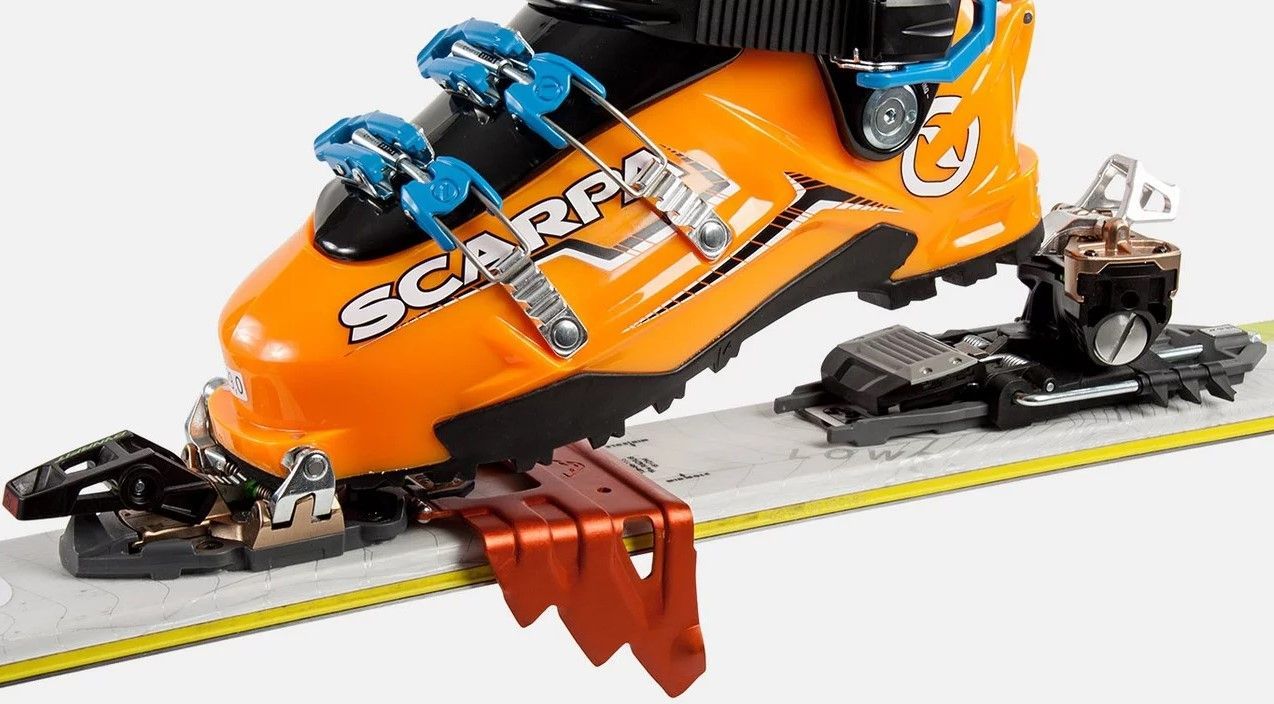
Touring skis can also get rode hard and put away wet, so to speak, so you'll really need to know about these before you just jump in and buy something used. Also, keep in mind that the specialty bindings on these require differtent installation templates. If your local shop doesn't carry touring gear, odds are they cannot work on the bindings. These require very specific expertise for technicians; they, generally, can't be worked on by your run of the mill shop.
In the end, the higher level/more accomplished skier you are, the more likely it is you'll have to buy skis.
SOME NOTES ABOUT THE DIFFERENCES BETWEEN BEGINNER AND EXPERT SKIS:
Stiffness if the most significant difference, and by that, I'm referring to both stiffenss over the length of the skis, and torsional stiffness.
Firstly, the stiffer a ski is of it's length, the more difficult it is to flex into some kind of "C" shape, which facilitates turning (along with sidecut- more about that below). Stiffer skis are more demanding because they require more strenght, muscle memory, higher skill sets, stiffer boots, and to be moving at higher speeds before you can start turning them (if you think about the total required energy to flex stiffer skis, speed contributes to the total energy in the overall energy computation).
If a ski is torsionally stiffer (less twist over the length of the skis) it has superior edge grip, but is very demanding. Your balance must be precise, along with when and how much power you apply throughout the turning cycle. Advanced skis also come with less forgiving tune ups, all of which contribute to it being more difficult to skis skid into, and out of, a turn.
Sidecut also contributes to how a ski skis, but it's more about what the ski
s specific purpose is. Learner skis (beginners) and advanced skis (advanced skis) can both have a lot of sidecut. The specific shape of that sidecut, along with the flex of the skis contribute to the performance. Just remeber that, as a rule of thumb, the more shape a ski has, the more it's locked into a specific size or shape of turn.
Camber contributes to how demanding the sweet spot is and how much pop the ski has when you finish a turn. A a general rule of thumb, more camber means the skis are more demanding.
Remeber; a smaller sweet spot forcces a skier into a more demanding stance with a more precise touch over their controling motions and pressure application throughout the turn. You really can't relax on a ski with a tight/smaller sweet spot.
You can determine camber by putting two brand new, unmounted skis together with their bases touching, then taking note of the distance between the bases at it's farthest point (usually at the center mark of the skis).
Flex is also a major contributor here, but you aren't likely to find a lot of camber on beginner skis. For the most part, slalom racing skis tend to have the most camber.
That covers it, for the most part.
If you have any questions related to the terminology I've used herein, refer to my Glossary tab for a more detailed explanation of what each term means and how it applies.
Support your local, brick and mortar ski shop. They provide employment locally, not to mention tax revenue for the municipality they're located.
Remeber, service is everything, and there's no substitution for a local shop that provides good service and expertise.
Lastly, it's a heck of a lot easier dealing with a local shop for warranty issues, and it's usually cheaper. If you process a warranty claim through the shop you bought your products from, you're likely to save costs for rentals while you wait for the issue to be resolved, and any labor associated with the issue.
In the end, discount houses aren't really cheaper. Do the math for overall costs, including shipping. If they do a binding installation according to your BSL, you'll still have to have the bindings adjusted at a shop for additional cost (don't do it yourself).
Another key point about online retailers installing bindings according to your boot sole length is that the BSL pressed into the sole of your boots is only accurate withing a range of several mm. Where your boots sit on the skis is essential to how they perform. With many skis, being off by 3 mm can make drastic changes to a ski's performance. ALWAYS have your bindings installed to the specific boots you will be using.
Additionally, there are a lot of fly by night, even fake, online retailers out there these days.
Do yourself a favor- buy local, you'll save in the long run. In the end, time and heartache all have tangible costs to you. A local shop will handle the stress for you, especially when dealing with warranty issues.
Job factors; If you're an accountant, your busy season correlates to the ski season Year end, tax season, etc)
*Understanding ski pass pricing tiers is very important. Many Pass issuers include block sales, where you can buy a multi-day block, at a lesser expense than day to day lift tickets over the long run of a season. That will require you to limit your skiing to the ski area (or areas) under that pass' umbrella, but it's a economically sound thing to consider.
On a personal note, being a leasing retailer sucks. It's maintenance and labor intensive, not to mention chock full of aggravation and other isues. If you do a season lease, don't be a jerk. Listen to your lease provider and abide by their rules. The customer is NOT always right, and being a pain in the neck puts that retailer one step closer to ending the lease program in their store. If the lease provider offers free sizing changes, call ahead- let them know you're coming. Make it easier for them and you.

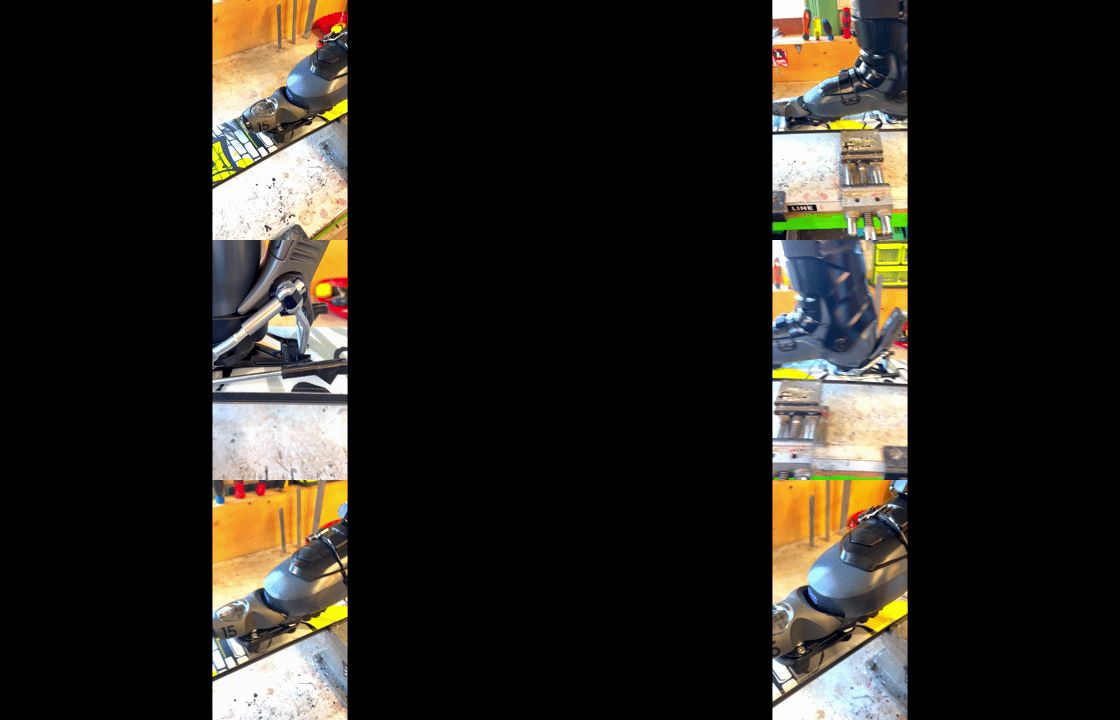
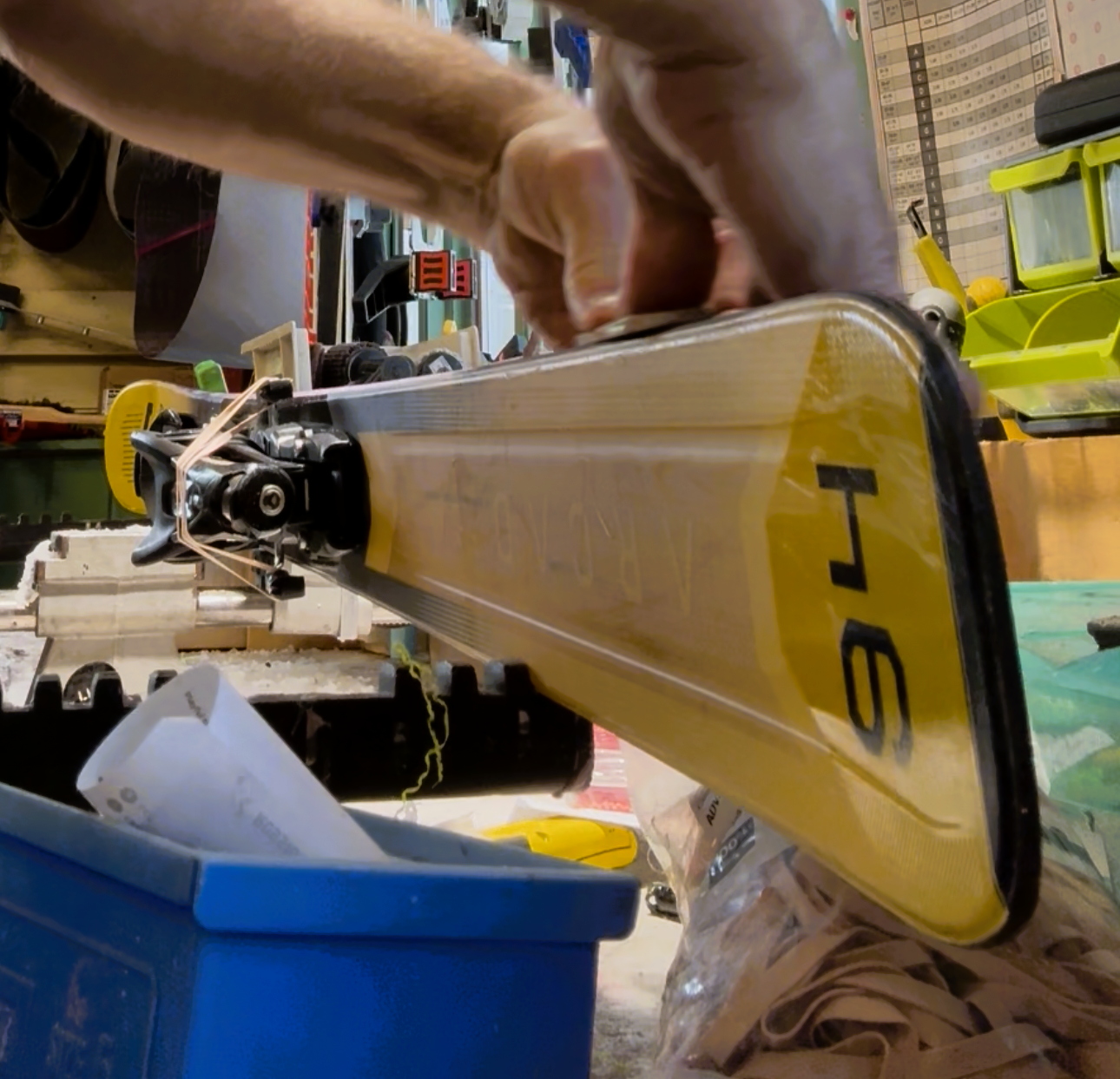
What do you mean you can't adjust my bindings to my new boots? (Part 3: What is Backcountry Skiing?)