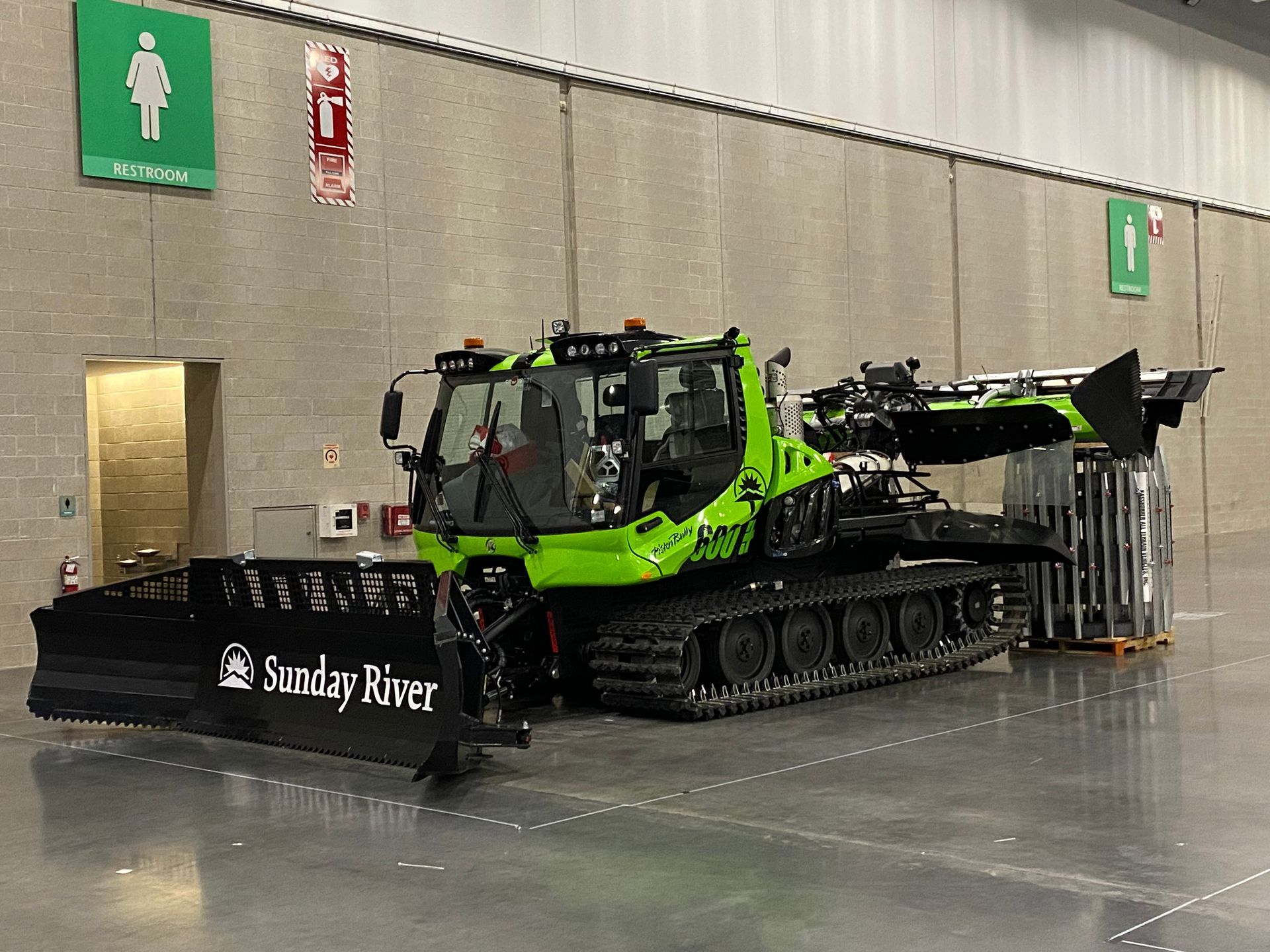
Snowbound 2026 Has Changed Venues (an ode to New England ski retail)
The east coast ski expo has always been in Boston. Now, it's moving to Mohegan Sun in Uncasville, CT; more than 100 miles/2 hours away (without traffic, of course)

The Boston Ski Expo has been a thing since 1989.
It was started by a guy named Bernie Weischel (who started the company called BEWI), and was staged in the old Bayside Expo Center, on the Columbia Point peninsula in Dorchester, Massachusetts, right along Dorchester Bay and Morrissey Boulevard.
In the modern vernacular, that show was LIT!
It was known throughout the region where people from Rhode Island, Connecticut, New York, Massachusetts, Vermont, New Hampshire, and Maine would come to enjoy the unofficial kick off to the eastern ski season.
They came seeking big discounts on outdoor gear, lift tickets and resort passes, club memberships, beer at the bar in the show, and also enjoyed entertainment and found relevant information for everything from lodging to lessons, within.
The line to get in often took hours, and snaked from the internal entrance doors to the back of the parking lot- People often braved pretty nasty weather to get in to the show.
Inside were shows put on by ski, snowboard, and "aggro" athletes (inline skate, BMX, tampoline, etc.) and ski movies. There were displays, activity booths; manned by outdoor sports vendors from all over the country, beer and food vendors, ski area representatives, real estate companies, ski clubs, clinicians (everything from masseurs/masseusses to doctors, physical therapists, pedorthists, and chiropractors), car dealers, an enormous retail space, and just about anything you could think of that may, in any way, relate to outdoor (especially winter) sports were there.
Over time, Bayside sold to become the massive $5 billion, 36-acre mixed-use redevelopment project known as Dorchester Bay City. So, the ski show moved to The Seaport Hotel and Convention Center, with just a little loss of momentum.
In 2019 the show sold to SIA (Snowsports Industries America), just prior to COVID. During COVID, there was no show, as one might imagine.
After Covid and under the new management of SIA, the show moved to The Menino Convention center, just down the block in the Seaport.
Through it all, the "Ski Show" (as it was colloquially referred to), was scaled down a bit, but remained in Greater Boston, where its has remained the unofficial kick off to the ski season on the east coast.
From 1989 right up until COVID, the show was absolute madness... in its heyday, somewhere on the order of 45,000 people would roam through that show during the 4 days it was on (usually the Thursday through Sunday corresponding closest to Veterans day). The retail outlet would reportedly gross somewhere on the order of $2.5 +/- million in those 4 days.
Ironically, the timing of the sale to SIA proved fortuitous for Bernie. As I mentioned above, there was no show during the covid year.
.
Prior to covid, several retailers had the retail space; The now defunct Ski Market (once the largest winter ski and sports retailer in the country) had it the longest, then East Coast Alpine (also now defunct) had it for 5 years or so, and then Country Ski and Sport, a smaller, family owned retailer who is still in business, South of Boston, had it for 3 or 4 years.
Up to that point, being a retailer at that show was a highly lucrative endeavor.
Boston was not the home of the first ski show. True to form, the concept of the ski show first started in the greater New York City region, with Mount Everest Ski shop, out of New Jersey, being the headline retailer at the Meadowlands about a decade earlier.
Upon realizing how lucrative such events could be, smaller, regional shows sarted popping up. For example, there was the Ski Show at The New Haven Jai Alai Fronton, where Alpine Ski and Sports, based in Cheshire CT, was the retailer (yep- I worked for them, in their North Haven location, as well as having worked multiple shows/events, over the years- including the Boston SKi Show, in some capacity or other, for decades).
BEWI also had a show in Colorado... but remember, this is an east coast based blog, so in the interest of keeping it relevant, we wont go there.
The advantage of retailers being able to sell at these shows was multi-faceted; it gave them a large, well attended venue where the opportunity to sell off aging goods was much greater. These retailers could buy goods for their regular shops with a bit more impunity because there was less fear of being stuck with older gear, no matter what the weather was like that year. Retailers also found that the demand for goods at these shows was so great that they could buy higher volumes of goods, at closeout, mostly intended for the show, and make a ton of money that way.
Unfortunately, the downside for retailers was, and is, the fact that shoppers became "trained", so to speak, to wait for end of season sales -especially after the busts of the .net and real estate booms -otherwise known as economic recessions- caused people to have significantly less disposable income. Because of that, EVERY ski shop had to adjust. They started putting strong emphasis on spring and fall tent sales, among other things. We also saw the advent of online discount houses, and we found that those who could not innovate or buy smartly during the best and worst snow years, could not survive.
In the last 30 years, the industry has seen massive consolidation, with hundreds of independent and big-box shops shutting down due to the rise of e-commerce, climate-impacted winter seasons, and corporate resort pass networks (like IKON and Epic) shifting gear sales online.
Overall, the 30-year history of east coast ski retail is defined by the high-profile bankruptcies of several major regional and national chains.
For example:
Ski Market (2010): A massive blow to New England. This Boston-based chain, which started as St. Mortiz Sports, was once the dominant ski retailer in Massachusetts, Rhode Island, and Connecticut. It filed for Chapter 11 bankruptcy and liquidated all 15 of its stores after 39 years in business.
Princeton Ski Shop (2008): A legendary institution. Founded in New York City in 1916, it grew to operate four large superstores in the NY/NJ metropolitan area. The company liquidated entirely after a string of poor weather seasons in the Northeast.
Eastern Mountain Sports (EMS) & Bob’s Stores (2016–2024): These staple New England outdoor and sporting goods retailers filed for multiple bankruptcies over the past decade. While Bob's Stores liquidated entirely (I worked there too), and EMS closed numerous regional locations, heavily reducing their brick-and-mortar winter-sports footprint.
Herman’s World of Sporting Goods: Though closing its doors earlier in this 30-year window (1996), this major East Coast "big-box" retailer was a primary destination for ski equipment, and its total liquidation permanently altered the regional ski market.
Most recently, retail duties for the ski show has been sponsored by a smaller retailer out of Springfield, MA; Colorado Ski Shop (Yes, you read that name right, and no, it has no ties to Colorado).
The size and scope of the retail section has been greatly reduced since covid, and SIA began charging a (somewhat exhorbitant) fee for having the retail space. For that very reason, Country Ski and Sport started having its own mini-expo, in Hanover, MA, around the same time of year (usually a week earlier). Those issues have diluted the retail income at the Boston Ski Show significantly.
So, with that, SIA has seen fit to move the ski show to Mohegan Sun, and reduce the number of days to just 2 (November 14 and 15, 2026).
Over time, having the ski show in Boston has become more and more expensive. The logistic involved have also become prohibitive.
So, for the following reasons (and others) the show is moving to nowheresville, CT-
Free Parking & Better Amenities: Boston's Seaport District featured expensive, difficult parking. Mohegan Sun offers free parking, more accessible dining, and weekend hotel and entertainment options.
Brand Activations: The Boston venue placed heavy regulations and expensive fees on what exhibitors could bring. Mohegan Sun offers fewer restrictions, allowing brands to offer larger experiences, giveaways, and interactive zones.
Broader Reach: The new location positions the event to draw attendees from New York City and the heavy concentration of ski resorts in Connecticut.
With that, I have to ask, are we witnessing the end of the Boston Ski Show, or will the mini-show in Hanover become it? The show in Hanover has placed itself in a position to become such an endeavor, by having some vendors/booths, which gives them the benefit of some understanding related to the logistics of such a show- especially after having poached one of the key players from the original BEWI show, who has the knowledge and experience to put such a thing together.
For us, only time will tell- One shop is in a position to swoop in and take the honors of the Boston Ski Expo from SIA, because SIA decided to move the show away from Boston.
Having said that, the logistics of such a show is a year-round endeavor, for a pretty significant staff. It would be quite difficult for a small ski shop to put all that together AND run it's retail business.
Does that mean the (aging) former Ski Market person has the wherewithal to take the reins for such an event?
Possibly?
Are there legal implications for such a thing?
Probably.
Knowing something about him and that retailer, he's likely made some small moves to form an LLC or "C" corp just in case (or, more likely, already has one), to potentially reform an organization akin to BEWI.
That's not to say there wont be competition for such an event, but this person has the contacts, and the experience to pull such a thing off.
What will happen to the retailer who's currently in the SIA ski show?
That also remains to be seen. Moving the show is a big risk. Between the reduced hours, the change of venue and the flailing economy (especially considering the price of gasoline, currently) the trend around a reduction in ski hardgood retasil sales is likely to continue, and likely trend a bit worse.
Case in point- The past few years have seen the following changes to the retail industry:
Over the past five years, ski retail profits have faced a margin squeeze. While the total revenue for the broader U.S. ski and snowboard shop market has grown at a modest Compound Annual Growth Rate (CAGR) of about 0.6% to hit $1.4 billion, gross margins for non-resort shops have tightened due to increased competition and unpredictable weather.
Diving deeper, using info from SAM (Ski Area Management), KIRO 7 news, Grand View Research, and few other sources, the following info is relevant:
1. Margin Squeeze for Traditional Retailers
While the broader industry has seen robust growth in participation and apparel demand, traditional brick-and-mortar retailers away from resorts have faced declining gross margins. Shops are squeezed by having to match frequent online discounts and dealing with higher operating expenses (like labor, insurance, and utilities).
2. Resort-Affiliated Shops Remain Dominant
Retailers located directly at ski mountains (e.g., Christy Sports, Vail-owned shops) have maintained better overall profitability. They benefit heavily from the "captive audience" of destination skiers and pass holders who often rent gear or buy premium soft goods on-site.
3. Weather-Driven Volatility
Annual profits are highly weather-dependent. Warm winters and delayed snowpack have historically pushed the start of the retail season back, causing sharp, localized drops in early-season sales and forcing shops to rely on heavier markdowns at the end of the year
4. Shifts to E-Commerce
The growth in the ski and snowboard market has increasingly shifted online, with North American ski apparel sales through digital channels growing at an impressive 6.5% CAGR. While digital presence provides wider market access for retailers, it has driven aggressive pricing and increased price-comparison shopping.
5. Sector Growth and Premiumization
On the equipment and apparel manufacturing side, the global winter sports equipment market is valued at over $21 billion, projected to grow at a 4.5% CAGR. Premium and luxury ski clothing have been a major bright spot, with strong consumer demand for high-performance, eco-friendly, and stylish gear driving up average order values
All while ski areas have seen healthy growth recently, as reported by SAM (Ski Area Management Magazine).
A key point in the linked article from SAM is that ski rental dollars have increased significantly. Is that due to the fact that people are buying less ski gear?
Maybe.
It's a fairly strong indicator, but correlation is not causation.
Exploring that a bit further, if tie that in with a few other factors, the picture becomes a little clearer- Factors such as rising prices, economic issues, less favorable weather in the New England region (among others), and a clientele which, already, has proclivities to want the best and the newest, point to that correlation making sense.
Looking closer at ski hardgoods, sales for which have dropped over the past few years, we can make some reasonable assumptions.
Most importantly, ski areas have put an emphasis on high-end rentals and demos, which allows people to use higher performance skis while not having to buy them outright, especially if their annual number of ski visits is less than 10 days. Vail has introduced both a rental delivery service and "My Epic Gear", which allows passholders to reserve higher end hardgoods for use at EPIC resorts. The convenience of these services allows an already demo-conscious, higher end, skier to reserve skis for their trip(s), which opens up several obvious conveniences.
In my shop, and other mountain shops, the demand for demo/high end skis, has risen greatly. Ski area shops must now have a large complement of demo skis. Ski shops in these regions accomodate a larger percentage of higher end skiers, who are much more in tune with what they ski on, because they ski more days every year. They've made skiing an investment tied to something they enjoy, so they want gear that maximizes the enjoyment factor. Additionally, we have realized that we must separate high end rentals from the demo fleet, because the high end renters interfere with availability of demo skis, which in turn interferes with the ski sales demos create. Not to mention the fact that renters, are significantly harder on skis than single-day ski testers (their goals are different).
...I'll have to dedicate a blog article to just that, so we don't go down too deep of a rabbit hole here...
That said, given all the things I've pointed out above, anyone still making money as a ski retailer in New England should be savvy enough to be able to survive as a ski shop, even after the potential loss of income from a folded SIA show, esecially if they put an emphasis on online sales while managing a smaller, overall, retail foot print.
In the end, who's the big loser from such a thing?
Us.
The everyday Joe and Jane who are best served by brick and mortar shops in their region.
The service side of the ski industry cannot be replaced by online retail. Bindings need to be installed and adjusted. Skis and snowbards need to be tuned and maintained, boots need to be custom fit, repairs need to happen...
So, we really must have places that can handle services.
Who has the greater advantage in this arena?
Can those services be handled onsite at ski areas, or in shops local to those areas, or is it more likely metro (downcountry) shops will benefit most?
Starting with Ski area shops, there are some challenges, not the least of which being tuning/race tuning/binding work for people who don't have ski houses at a ski area. Time becomes a bigger factor, especially if someone is just doing a day trip and needs their stuff serviced with a quick turnaround.
In my own little corner of the world, I've put an emphasis on growing service dollars to accomodate these changes. Service dollars are, by far, the highest margin dollars, and are essential to maintaining and growing business in the modern ski industry.
Is that the best way for mom and pop shops to survive?
Partly- Remember, many of the services I listed above require a significant amount of expertise (boot fitting and ski tuning, for example), and time to complete. That means paying people more to work in these shops, along with added shifts to accomodate work loads.
Both downcountry and ski area shops benefit from having a thriving rental business - the advantage, however, goes to shops who are closer to a ski area.
Having a significant season lease business, can give an advantage to down-country shops, since leasing happens (mostly) pre-season. Two of the shops I mentioned previously (Country Ski and Sport and Boston Ski and Tennis) rely heavily upon this type of business.
There are costs to that too. So having a high end rental fleet and demos really becomes the advantage of mountain shops because the value of those services, for retailers, is in having those skis get rented often. Lease skis only need to go out at the beginning of the season, then get returned at the end. So the value becomes having skis that are tough and timeless, not to mention inexpensive, which get leased out for several years. Since high-volume leasing is time consuming, down-country shops can put a better focus on that, if they build processes around efficiency and convenience for customers.
In the end, leasing is a life saver for shops in major metropolitan areas, which are reasonably close to New England Ski areas. Case in point; rumor has it that BST does somewhere on the order of 10,000 season leases a year. With their website listing prices that start at $189 for adults and $99 for kids (they've built a lease business which can accomodate multiple priving tiers), that's a good chunk of money.
In the end, what does moving the ski show mean? Well, I see several things.
SIA doesn't have the savvy (or the direct commitment) of Bernie Weichel. That raises concerns around the commitment to growth of the (now New England) ski show. GIven the trends in the industry, all signs point to the move to Mohegan Sun being risky.
With the show moving, that also means a reshuffle of dollars in the region. It also leaves a bit of a void for Boston Ski sales.
Will BST or Country ski and Sport swoop in to take advantage of the void?
They should.
Whether they, or someone else does, remains to be seen.
My guess is that both retailers are close to a saturation point for their daily business, so managing the show (which is, in effect, like managing another store in the region), becomes problematic, and few people have the vision, or commitment, that Bernie had.
No matter how you slice it, it creates a bit of volativity for the ski industry in the Boston Area.
Hopefully, we will see some kind of return to regular retail sales with some emphasis on service, and less of this "waiting for the big sale" mindset by the shopping public. Unfortunately, that will likely take the better part of a generation, which will hurt the region, in the short term (which could have long term effects with store closures, etc., especially down-country).
Additionally, a lot will need to happen for that change to take root- not the least of which is all shops throughout the region need to stop having end of season sales at large discount percentages. Convincing them to reduce their open to buy for a few years will be darn near impossible, so the idea of that becomes laughable. In a nutshell, the end of season sale will never go away, but huge discounts on in-line goods MUST to go away, or brick and mortar shops will become a thing of the past- especially, as we have seen, in metropolitan regions.
Many will assume that this won't happen, because last season was was long, and snowy, which made it a decent retail year, overall. Don't be deceived by a minute upswing- it was nothing like years past.
Winter season retail often takes a year to react to weather conditions, but I don't see winter sports sales going gang busters for the entire season. There my be a strong start, but we are seeing a weather trend towards a strong El Niño system out west, of which the trend for that, on the east coast, has always been a weak snow year. That does not bode well for eastern skiing and ski retail.
To sum it up, we've seen a trend towards a reduction in the sales of hardgoods, throughout the industry, overall.
That hurts.
With the likelihood of a weaker season ahead of us, evidence points to rentals/leasing and service being a big part of the survival of brick and mortar shops throughout New England.
Losing the Ski Show in Boston is many faceted; as It may reflect a reduction in commitment by the industry to the region, and it's likely to effect overall ski dollars to the region. The dilution of brick and mortar retailer hardgoods sales due to rentals, online retail houses, the economy, trends in the weather, and reduced margins is a lot to contend with.
Add to that the fact that there's been a consolidation of ski vendors (I talk about that a bit in the intro to my ski reviews for the 26-27 season), the next few years will define the industry for the next few decades ahead. Having snowfall increase would certainly help, but we cannot count on that given the fact that ski seasons have been getting shorter (no politics here -this is a ski page- no matter what the cause, the season has grown shorter over the last 50 years).*
In the end, survival will depend upon family businesses (which rarely last more than 3 generations anyway) continuing to innovate around trends in the industry. Understanding your locale and finding niches within that domain are super important. Smaller businesses popping up around voids in certain regions will be very important (case in point- Nick's Bootfitting in the West Dover [Mount Snow] region has filled a void for specialty bootfitting not being provided by local shops in that area).
The Mount Snow region is a study on such opportunities, as shops in the region have become fairly specialized, with some being rental-centric, another being boot fitting centric, and only a few others being retail centric. There may be an opportunity for specialized tuning/ski service in that region, but that, in and of itself, won't drive enough dollars to be a separate shop. One shop will have to rise above the rest to provide such services, which would help drive dollars for other offerings in that shop.
Understanding regional nuances, then finding and creating opportunities therein, will be key for retailer survival in New England. High-end rental shops (who also offer other services), such as Boston Ski and Tennis and Country Ski and Sport, have found that niche.
In the end, we're due for another consolidation. Will it be driven entirely by the loss of the ski show? Probably not, trends show that there are other factors, and when you take away the stoke that the Boston Ski SHow brought to the region, that consolidation will likely be, somewhat accelerated.
Ski more.
Ski with friends.
Take someone who's never skied, with you.
Ski alone.
Take your kids skiing... Continue to grow your love for winter sports by passing it on the future generations, even if we are, as a whole, having less kids these days. Add them to after school ski programs and take them skiing whenever you can.
Retailers sell fun, and want you to have fun. So go have fun!
*Ski seasons have generally been getting shorter over the last 50 years. Research analyzing hundreds of resorts across North America indicates that average ski seasons have shortened by about 5 to 7 days when comparing the 2000–2019 period to the 1960–1979 period. [1]
The shrinking of the ski season is driven by several key factors:
- Warmer Winters: Winter is the fastest-warming season in the United States. Many locations are seeing freezing days start a week later and end up to four weeks sooner, leading to less natural snow and more precipitation falling as rain.
- Regional Impacts: Low-elevation ski areas in the Midwest and Northeast have been hit the hardest, facing catastrophic seasonal shrinkage and resort closures. Higher-altitude resorts in the Rockies and West Coast have fared better but still face inconsistent seasons.
- Increased Reliance on Snowmaking: Resorts have spent millions of dollars annually to adapt by making artificial snow. However, this requires sustained sub-freezing temperatures, making it a challenging and expensive workaround during warm winters. [1, 2, 3, 4, 5]
Looking ahead, climate models project this trend will accelerate. Depending on future global emission rates, ski seasons are projected to shorten by an additional 14 to 33 days by the 2050s. [1]
You can dive deeper into the data and projections by reviewing the EESI Winter Sports in a Changing Climate Article or exploring the full research published by Storm Skiing Journal.


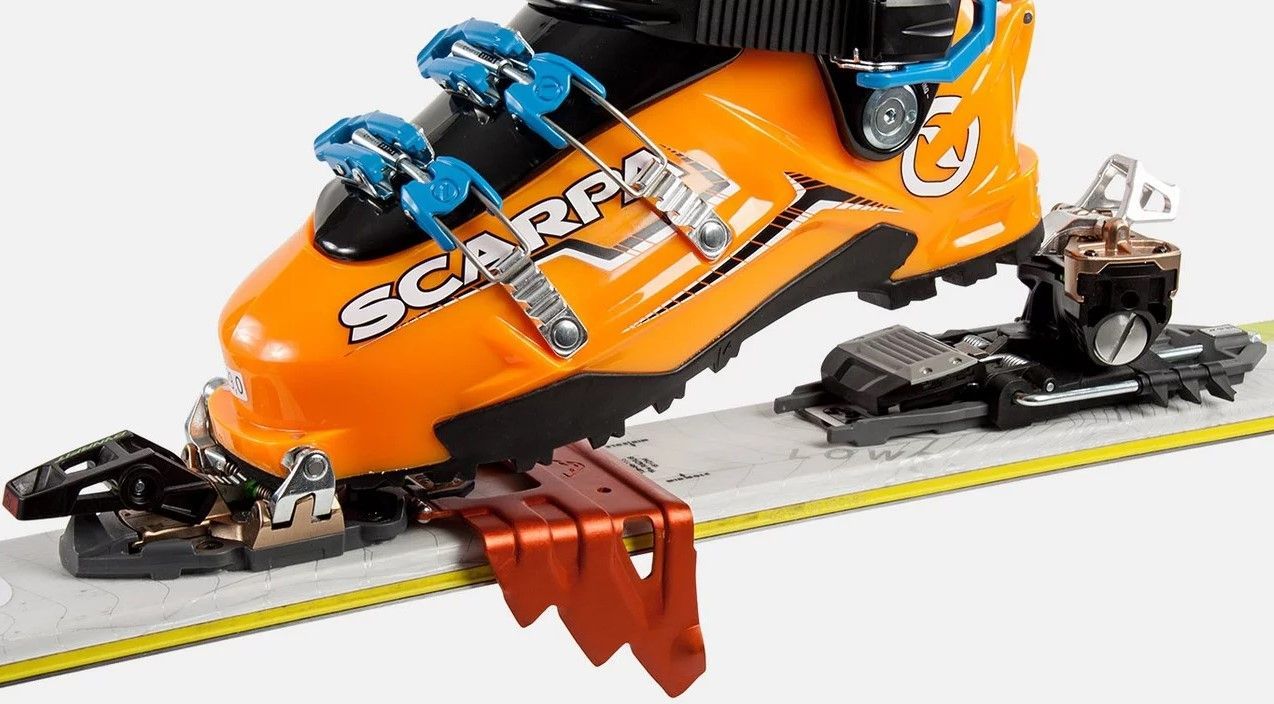
What do you mean you can't adjust my bindings to my new boots? (Part 3: What is Backcountry Skiing?)